

Introduction:
Publishing a video and optimizing a video for search are two different activities, and most businesses only do the first one. The video gets uploaded, given a reasonable title, and left to find its own audience — which, on a platform processing hundreds of hours of new footage every minute, rarely happens on its own. Video SEO is the set of practices that make a video discoverable, both on YouTube itself and inside Google’s regular search results, where video results now appear for a wide range of informational and how-to queries.
This guide covers what video seo services typically include, the specific work involved in youtube video seo services, and what to look for when evaluating a video seo agency or video seo company.
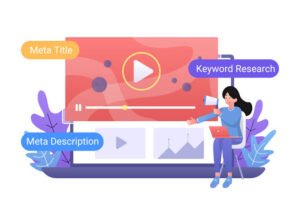
TL;DR
- Video SEO covers two separate search surfaces: YouTube’s internal search/recommendation system, and Google’s main search results where video thumbnails appear directly.
- Metadata — title, description, tags, and closed captions — is the foundation, but retention behavior matters as much or more.
- YouTube’s algorithm weighs watch time and session behavior heavily, not just clicks.
- Video schema markup helps Google understand and surface a video correctly in regular search results.
- A video seo company’s process should include keyword research specific to video intent, not a copy-paste of blog keyword research.
Two Different Search Systems, One Strategy
Video content competes in two distinct environments, and each rewards slightly different things:
- YouTube search and recommendations, which weigh watch time, session duration (does the viewer stay on YouTube after this video), click-through rate on the thumbnail, and audience retention curve within the video itself.
- Google’s main search results, where video results appear as thumbnails within regular organic listings for queries with clear “how-to” or demonstration intent — assembling furniture, comparing products, tutorials — and where video schema markup and page-level context around an embedded video matter as much as the video’s own metadata.
A strategy built only for YouTube’s algorithm can underperform in Google search, and vice versa. Video seo services that only optimize titles and descriptions for YouTube search, without also handling the page the video is embedded on and its structured data, are covering half the opportunity.
What Video Metadata Actually Needs to Do
Titles need to include the primary search term naturally, ideally near the front, while still reading like something a person would click — a title optimized purely for keyword match, at the cost of sounding like clickbait or a stuffed phrase, tends to hurt click-through rate more than it helps ranking.
Descriptions should front-load the most important information in the first two to three lines (the portion visible before “show more”), include the target keyword naturally, and provide enough real context that the description could stand alone as a useful summary — not a wall of hashtags and links.
Tags carry less weight than they used to but still help with topic categorization and misspelling variants; they’re a minor supporting signal, not a primary lever.
Closed captions and transcripts give search engines actual text to index from what would otherwise be an opaque video file, and they’re one of the more underused levers in youtube video seo services — accurate, human-reviewed captions (not just YouTube’s auto-generated ones) noticeably improve how well a video’s content is understood and matched to relevant queries.
Retention Is the Signal Most Teams Ignore
Metadata gets a video discovered. Retention determines whether it keeps getting recommended. YouTube’s algorithm tracks audience retention as a curve across the video’s length, and it’s genuinely difficult to fake — sudden drop-offs at specific timestamps tell the algorithm exactly where viewers lose interest, and videos with strong retention get pushed to more recommendation slots regardless of how well-optimized their metadata is.
Practical implications for anyone producing video with search performance in mind:
- Front-load the payoff — don’t make viewers wait 90 seconds through an intro before the video answers what the title promised.
- Match video length to intent — a quick how-to answer padded to hit a longer runtime usually hurts retention more than a shorter, complete video helps view count.
- Use pattern interrupts (chapter breaks, on-screen text, scene changes) at points where retention data shows viewers tend to drop off.
Video Schema Markup and On-Page Context
For a video to appear as a rich result in Google’s main search listings — not just inside YouTube — the page hosting it typically needs VideoObject schema markup, which tells Google the video’s title, description, duration, upload date, and thumbnail explicitly, rather than relying on Google to infer them from the embed.
Beyond schema, the surrounding page content matters: a video embedded on a page with a relevant text transcript, a clear heading structure, and supporting written content tends to outperform the same video embedded on a nearly blank page with no textual context — Google still relies heavily on surrounding text to understand what a video is about.
What to Expect From a Video SEO Agency or Company
Video seo services and youtube video seo services offered by a competent video seo agency typically include:
- Video-specific keyword research — search intent for video differs from text search; “how to tie a tie” and “tie knot tutorial” can have meaningfully different search volumes and competitive landscapes, and a good process treats them separately from a standard blog keyword list.
- Metadata optimization for titles, descriptions, tags, and thumbnails, including A/B testing thumbnail and title variants where the platform allows it.
- Transcript and caption creation, both for indexing and accessibility.
- Schema implementation on the pages where video is embedded.
- Playlist and channel-level structure, since YouTube’s recommendation system also weighs how videos relate to each other within a channel, not just individual video performance.
- Performance reporting tied to actual search visibility and watch time, not just raw view counts, which can be inflated by traffic sources that have nothing to do with search.
When evaluating a video seo company, the useful question isn’t “do you do video SEO” — most agencies will say yes — but whether their process separates YouTube-platform optimization from Google search visibility, and whether they can show retention and search-visibility data, not just view counts, from past work.
Video SEO helps businesses optimize their video content so it can be discovered through search engines. Learn more about Video search engines.
Frequently Asked Questions
Does YouTube SEO help a video rank in regular Google search too? Partially. Strong metadata and captions help both. But ranking a video directly inside Google’s main search results also depends on video schema markup and the quality of the page it’s embedded on — YouTube optimization alone doesn’t guarantee that.
How long does it take for video SEO to show results? Similar to written content, video rankings and recommendation traffic typically take several weeks to stabilize, and older videos can continue gaining or losing visibility as retention data accumulates and as new competing content is published.
Do view counts matter for video SEO? View count is a byproduct, not a ranking input by itself. YouTube’s systems weigh watch time, retention, and session behavior far more heavily — a video with fewer views but strong retention often gets recommended more than one with high views and steep early drop-off.
Is closed captioning worth the extra cost over YouTube’s automatic captions? Generally yes for anything competitive. Automatic captions contain enough transcription errors that they can misrepresent the video’s actual content to search systems, particularly with industry terminology, names, or accented speech.
Instagram:https://www.instagram.com/adminthemaven/